Look at Me: We Are the Boomers Now
Why millennial devs need to stop hating on Gen Z using generative AI

Kasper Svenning
January 2026

The divide between Millennials and Gen Z has never been more apparent since the rise of generative AI. But why does one generation hate what the other loves? Turns out, the reason is privilege.
TLDR:
POV: You are a Gen Z Developer
Imagine being 27 years old in today’s economy. You’ve done everything "right." You got the degree, you learned the frameworks, and you landed a job. But the prize at the end of the tunnel has moved. You are entering a job market where "entry-level" means “3 years of experience,” and the cost of living has turned the "starter home" into a myth. And forget about kids, you can’t afford them.
When you’re working to make someone else rich while barely covering your own rent, your perspective on "craft" changes. You aren't interested in the purity of the process, you’re interested in leverage. You are not paid to "apply your soul" to a corporate ticket, you are told to fix a problem using the tools at hand.
It makes perfect sense that Gen Z developers embrace Generative AI. For many, these tools aren't for their day job. They are the escape hatch powering their “ticket out of here” side-hustle. It is a calculated move to build something of their own just to keep their heads above water. They are looking for a loophole in a rigged system, and Gen AI is a tool that is fast enough to give them a shot at financial independence.
Their vision is fundamentally different from the Millennial developer. They arrived late to the party and are stuck maintaining the leftovers. To a Gen Z dev, AI isn't about "taking the easy way out." It’s about using technology to close the massive gap between the low wages they are paid and the soaring cost of the life they were promised.
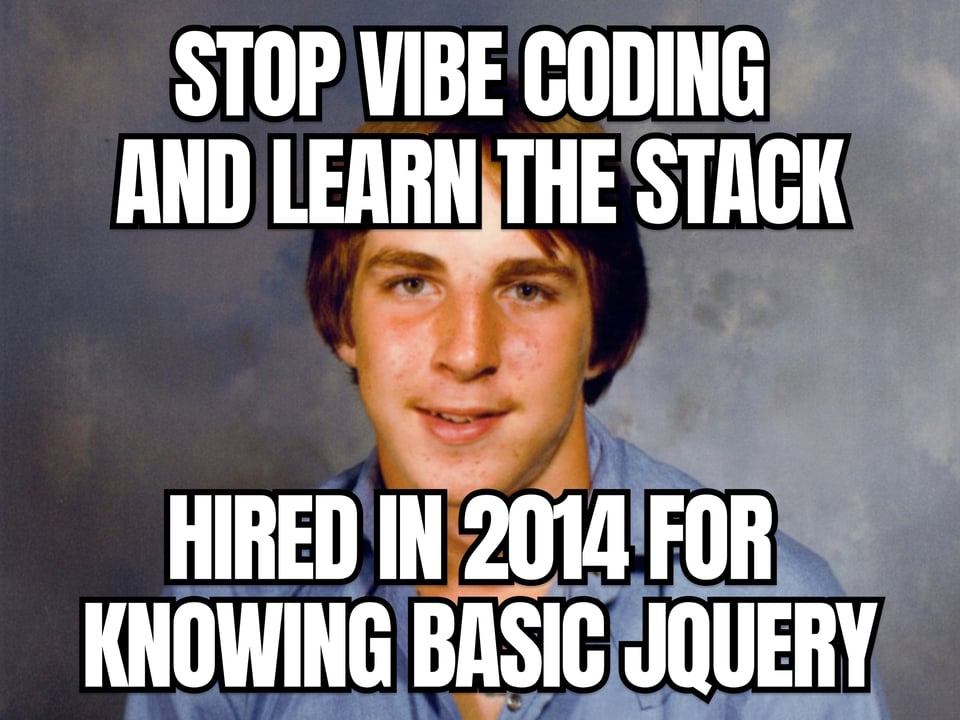
Check Your Privilege: We Had the "Golden Age"
Millennials, we have to be honest with ourselves: we are the new "Development Boomers." We entered the industry when companies were desperate to hire anyone who could spell HTML. We rode the wave of the App Store gold rush and the zero-interest-rate policy (ZIRP) era where venture capital flowed like water.
Many of us bought flats or houses. Expensive, yes, but we got in. In major cities throughout the world, some of us make more in annual equity on our apartments than we do from our actual salaries. We have the "Senior" titles and the financial cushions to survive a layoff. We are judging the "easy way out" from the safety of the fortress we built during the good times.
We tell ourselves we deserve our status because we spent time "on the floor" mastering the command line or building custom games on a Commodore 64. But here’s the truth: we did that because we were there when those things were new. We didn't choose the hard way because we were more disciplined, we did it because it was the only way back then. It’s easy to romanticize the "grind" of the past when that grind led to property ownership. Today, that same level of manual grind doesn't guarantee a Gen Z developer anything, so why should they worship the “old ways”?
The Myth of the "Real Developer"
The most common gatekeeping tactic is the appeal to tradition: “You didn't spend years tinkering with low-level assembly!” or “You’re just prompting, not coding!” We treat our struggle with archaic documentation as a badge of honor, but we forget that having the time to struggle is a luxury. We had the stability to spend years mastering the "hard way." For a Gen Z developer trying to pay rent today, "learning the fundamentals" for three years isn't a rite of passage. It’s a cost they can't afford. The real privilege isn't knowing the code, it’s having had the safety net that allowed us to learn it slowly.
As I’ve written before, we are in the last days of "Vibe Coding." For a generation locked out of traditional wealth, the ability to bypass the "blank canvas" is a superpower. Vibe coding allows a developer to focus on the what instead of getting paralyzed by the how. But that doesn't mean you shouldn't invest in yourself if you have time and ressources. That's setting yourself up for success in the long run, but again, you do you.
.jpg/public)
A New Year, A New Vibe
What developers should and shouldn’t learn from vibe coding
Let’s be clear: I don't think pure vibe coding is the ultimate way forward for creating the best possible software and the best developer version of yourself. High-quality, resilient systems still require deep knowledge and architectural discipline. But for people in survival mode, vibe coding is a means to an end. It is the only way for those in need to "try their luck" and see if an idea has legs before the crushing weight of the economy forces them back into the day job. We call it "the easy way out," but they call it hoping for a golden ticket to adulthood.
Refusing to use AI today is like a 90s developer refusing to use Google because "real coders use printed manuals." When Millennial developers bash Gen Z for using AI, they are often protecting their own ego. We fear that the years we spent mastering the "hard way" are being devalued. But if the goal is to exit the hamster wheel and build something of your own, why would you intentionally move slower? Yes, the drawbacks of a GenAI will hit you down the line, but it's a gamble I respect. Grifting and scamming is obviously not included.
From Gatekeepers to Allies
We need to stop blaming the younger generation for using the tools available to them. They aren't "lazy," they are efficient in a world that is significantly more hostile than the one we started in. They don't have the luxury of spending three years "finding themselves" in custom C64 code. They need to produce value now just to keep their heads above water.
Vibe coding is a tool Gen Z grabs onto because they can see its immediate effect. If we want them to eventually move beyond it and master the deeper layers of the web platform, we need to create the space for them to do so. We should be inspiring them to find the time and overhead to explore the platform by guiding them and sharing what we know. Instead of pointing fingers at their "shortcuts," we should be helping them navigate the complexities we’ve already mastered.
If we want to maintain our relevance as Seniors and Leads, our job isn't to gatekeep "how" the code gets written. Our job is to provide the architectural wisdom and the "don't take no for an answer" attitude that only experience provides. It’s time to stop acting like Boomers and start recognizing that for Gen Z, AI isn't a shortcut. It’s an attempt to find an equalizer.